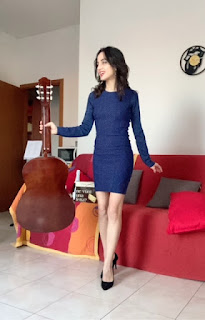
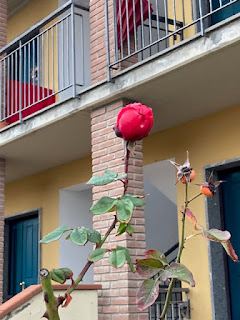
In spite of the obvious appearances, we are also something else, besides a bunch of gagged flesh and bones, tied to a screen, with a QR CODE instead of a soul.
...YET
…yet, to us
who were called
to co-create,
of the impulse of the heart
not even the absence
is left.
Per prenotare un colloquio di Counseling contattatemi attraverso il mio sito Le Vie per l'Armonia.
Se non altro, questi tempi tristi e biechi hanno ampiamente smascherato, a chi è capace di vedere, uno dei più potenti (auto) inganni dell’essere umano: l’ ‘altruistico’ teatrino del ‘lo faccio per te/per la società/per il bene dell’umanità’. Ora, chiariamo subito che tale atteggiamento è spesso, almeno in parte, mosso da un nobile desiderio di veder l’altro felice, da un autentico senso civico o semplicemente da un’innata benevolenza.
Tuttavia, in questo periodo, a meno di non trovarmi di fronte a Gesù Cristo, ogni volta che qualcuno fa affermazioni del genere sia a livello di relazioni private che sui social, mi viene un immediato attacco di orticaria.Per cominciare, soffermiamoci a sentire come trasudano di supponenza e ‘gentile’ senso di concessione frasi tipo ‘lo faccio perché fa piacere a loro’, ‘lo faccio per lei, poverina, che ci tiene tanto’, ‘lo faccio perché IO sono un bravo cittadino’.Osserviamo anche come questo prestarsi a far qualcosa per gli altri raramente sia del tutto gratuito: c’è un ritorno in apprezzamento, valorizzazione…ci fanno sentire importanti, competenti, indispensabili.
Infine, se siamo abbastanza onesti, potremmo perfino accorgerci che è molto più facile adoperarsi per una generica ‘collettività’ o per persone con cui non siamo emotivamente molto coinvolti, piuttosto che per il proprio partner, la propria mamma o il proprio fratello. Se costoro malauguratamente hanno osato manifestarci un desiderio, guarda caso glielo facciamo pesare, considerandoli fastidiosi o troppo bisognosi. Già, poiché dietro il ‘lo faccio per far piacere a te’, c’è il controllo del piacere altrui, concesso a propria discrezione e piacimento; c’è la volontà di non concedersi mai totalmente e la paura di lasciarsi penetrare da un sentimento che potrebbe portare intimità e coinvolgimento.
Alla resa dei conti, l’essere umano medio ama molto la propria gabbietta e ha tutto il diritto di restarci; un diritto che, a quanto vedo, tendiamo ad esercitarefino in fondo. Godiamo più nel piacere distorto dei giochetti di potere piuttosto che nel dare seguito a una dolce emozione, a uno slancio del cuore o all’inebriante vertigine del lasciarsi andare.
Come dice Massimo Rodolfi, l’uomo non solo non è ancora in grado di amare, ma soprattutto non è capace di lasciarsi amare.Questo implicherebbe il cominciare a voler bene in primis a se stessi, ascoltandosi, risolvendosie cercando di trovare gioia nel proprio cuore. A quel punto potremo dare felicità e piacere anche agli altri, con autenticità e senza sbandierarlo tanto, essendosi ammorbidita la corazza che ci separa da loro e dalla Vita.
Per prenotare un colloquio di Counseling contattatemi attraverso il mio sito Le Vie per l'Armonia.
If nothing else, these sad and sinister times have amply unmasked, to those who are able to see, one of the most powerful (self) deceptions of the human being: the 'altruistic' theatre of 'I do it for you/for society/for the good of humanity'. Now, let's be clear that this attitude is often at least partly driven by a noble desire to see the other person happy, by a genuine sense of civic duty or simply by an innate benevolence.
However, these days, unless I'm standing in front of Jesus Christ, every time someone makes such statements either in private relationships or on social media, I get an immediate bout of hives.To begin with, let's pause for a moment and listen to how phrases like 'I'm doing it because it pleases them', 'I'm doing it for her, poor thing, who cares so much', 'I'm doing it because I am a good citizen' ooze with arrogance and 'kind' sense of concession. We also observe how this devoting ourselves to another is rarely completely free: there is a return in appreciation, valorisation... they make us feel important, competent, indispensable.
Finally, if we are honest enough, we might even realise that it is much easier to do something for a generic 'community' or for people with whom we are not very emotionally involved, than for our partner, mother or brother. If they have shyly expressed a wish, we just happen to burden them with it, making them feel dependent, annoyed or too needy.
Yes, because behind the ‘I'm doing it to please you' there is the control of other people's pleasure, granted at our discretion and pleasure; there is the will to never give ourselves totally and the fear of letting ourselves be penetrated by a feeling that could bring intimacy and involvement.
At the end of the day, the average human being loves his cage very much and has every right to stay in it; a right which, as far as I can see, he/she tends to exercise to the full. He/she enjoys the distorted pleasure of power games more than following up on a sweet emotion, an impulse of the heart or the intoxicating vertigo of letting himself/herself go.
As Massimo Rodolfi says, not only is man not yet able to love, but above all he is not able to let himself be loved. This would imply starting to love ourselves first of all, listening to ourselves and resolving ourselves, trying to find joy in our heart. At that point we will be able to give happiness and pleasure to others too, genuinely and without bragging about it, because the armour that separates us from them and from Life has softened.
Per prenotare un colloquio di Counseling contattatemi attraverso il mio sito Le Vie per l'Armonia.
“Sapete cosa significa rientrare in casa e trovare una donna o un uomo che vi danno un po’ d’amore, un po’ di affetto e un po’ di tenerezza? Che avete sbagliato casa, ecco cosa significa!”(Henry Youngman)
La canzone ‘Heavy On My Heart” della cantante Anastacia uscì come singolo nel 2005 e ricordo che mi affrettai a compralo, perché affascinata sia dalla musica che dal testo. Non è un caso che mi sia tornata in mente in questo periodo oscuro e che rappresenti il mio stato d’animo da più di un anno a questa parte. Non posso sapere a cosa si riferisse Anastacia in questa canzone, e alla fine nemmeno mi interessa; posso solo raccontare il riverbero che ha in me in questo particolare momento, che è diverso da quello del 2005.
Le parole delle strofe illustrano il mio senso di sconfitta e fallimento almeno dal punto di vista umano: quello che potevo costruire e non ho costruito, quello che amavo fare e che non potrò fare più, il sentirsi ‘un violino senza corde’ e ‘ogni respiro che diventa un sospiro’. Il ritornello esprime la mia percezione di estremo smarrimento e solitudine, con qualche sprazzo di luce rappresentato dal ‘toccare le ali di un angelo.’
Per quanto mi riguarda, leggo l’appello all’amore del bridge e questo ‘angelo’ in forma non personale e trascendente e, senza dubbio, non in forma di relazione sentimentale. Ho già detto in molti miei post che non ho mai sperimentato serenità, gioia o sicurezza in un rapporto di coppia, benché i miei requisiti fossero sempre stati abbastanza minimi: il desiderio di stare insieme, una piccola vacanza, un Capodanno, dei fine settimana condivisi. Non ho mai chiesto il guru che mi salvasse o il partner ricco che mi facilitasse la vita materiale. Per cui, l’ amore che mi resta è quello dell’Anima, il calore spirituale, l’unico capace di trovarmi nell’oscurità e di non deludermi mai.
Qui di seguitoposto la mia versione della canzone, il testo e la traduzione.
"Do you know what it means to come home and find a woman or a man giving you a little love, a little affection and a little tenderness? That you've walked into the wrong house, that's what it means!"(Henry Youngman)
The song 'Heavy On My Heart' by singer Anastacia was released as a single in 2005 and I immediately bought it because I was fascinated by both the music and the lyrics. It is no coincidence that it has come back to me in this dark period and that it represents my mood for more than a year now. I can't know what Anastacia was referring to in this song, and in the end I don't even care, I can only relate the reverberation it has in me at this particular time, which is different from what I could feel in 2005.
The words of the verses really illustrate my sense of defeat and failure, at least from a human point of view, of what I could build and I haven’t, of what I loved to do and will never be able to do again, the feeling of 'a violin without strings' and 'every breath gives birth to deeper sighs'. The refrain underlines my perception of extreme bewilderment and loneliness, with a few flashes of light represented by 'touching the wings of an angel.'
Personally, I read the bridge's appeal to love and this 'angel' in a non-personal and transcendent form, certainly not in the form of a romantic relationship. I have already said in many of my posts that I have never experienced serenity, joy or security in a relationship, though my requirements had always been quite minimal: a desire to be together, a holiday, some shared weekends. I’ve never asked for the guru to save me or the rich partner to make my material life easier.So, the love I should turn to is that of the Soul, the spiritual warmth, the only one capable of finding me in the dark and never letting me down.
La canzone ‘Liability’, della giovane cantautrice neozelandese Lorde, muove in me un sentimento di profonda tenerezza. Parla del sentirsi un “peso”, una “responsabilità” che disturba, che allontana le persone o le fa avvicinare solo finché hanno bisogno. Quando ero giovane, ma è comunque un tema che ritorna nella mia vita, ho vissuto l’esperienza del sentirsi ‘troppo’ o ‘di troppo’ in una relazione o nella vita di qualcuno.
Del resto, le persone dotate di una qualità e di una quantità di energia non comune sono sempre un po’ ‘perturbanti’ per l’individuo medio, fisiologicamente incapace di gestire frequenze emotive, intellettive o spirituali fuori dal range ordinario. Può quindi capitare che un amico o il partner dichiari, a parole, di voler stare con noi per poi, di fatto, squagliarsela alla prima occasione.
I versi del brano che, a ogni ascolto, mi fanno salire le lacrime agli occhi, sono:
“Faccio del mio meglio per soddisfare le sue richieste,
gioco al romanticismo, balliamo lenti nel soggiorno,
ma tutto ciò che un estraneo vedrebbe
È una ragazza sola che ondeggia
Accarezzandosi la guancia”
Ecco lo straziante contrasto tra il dolce sogno e la cruda realtà:ascoltare i desideri e i bisogni dell’altro con l’illusione di essere in due, per poiritrovarsi soli, gli unici a donarci po’ di amore e compagnia.
Tuttavia saper dare, aprirsi e condividere, nonostante le cocenti delusioni, ci rende degni, come canta in chiusura la canzone, “di dissolverci nel sole”. È un’immagine toccante, che rende giustizia a chi è riuscito ad attraversare una soglia, a camminare oltre le proprie ferite e il proprio dolore, attraversando il deserto dell’abbandono. Solo così i nostri occhi si temprano per accogliere la più pura luce e i nostri cuori si preparano all’abbraccio del più dolce amore; il resto, in fondo, era solo ‘scuola’.
Qui di seguito posto il video con la mia interpretazione della canzone, il suo testo e la traduzione in italiano.
The song ‘Liability', by the young New Zealand singer-songwriter Lorde, moves a feeling of deep tenderness in me. It is about feeling a 'burden', a 'responsibility' that disturbs, that pushes people away or makes them approach only when they need it. Especially when I was young, but it is still a theme that recurs in my life, I experienced feeling 'too much' or 'too much' in a relationship or in someone's life.
On the other hand, people with an uncommon quality and amount of energy are always a bit 'disturbing' for the average individual, who is physiologically incapable of handling emotional, intellectual or spiritual frequencies outside the ordinary range.So it can happen that a friend or partner will say in words that they want to be with us and then, in fact, run off at the first opportunity.
The lines in the song that bring tears to my eyes every time I listen are:
"I do my best to meet her demands
Play at romance, we slow dance In the living room, but all that a stranger would see Is one girl swaying alone
Stroking her cheek"
Here is the heartbreaking contrast between the sweet dream and the crude reality: listening to each other's desires and needs with the illusion of being in two and then finding ourselves alone, the only ones to give us some love and companionship.
However, knowing how to give, to open up and to share, despite the bitter disappointments, makes us worthy, as the song closes with, 'of dissolving into the sun'. It is a touching image that does justice to those who have managed to cross a threshold, to walk beyond their wounds, beyond their pain, across the desert of abandonment. Only in this way are our eyes hardened to receive the purest light and our hearts prepared for the embrace of the sweetest love; the rest, after all, was just 'school'.
Below is the video with my interpretation of the song and its lyrics.